
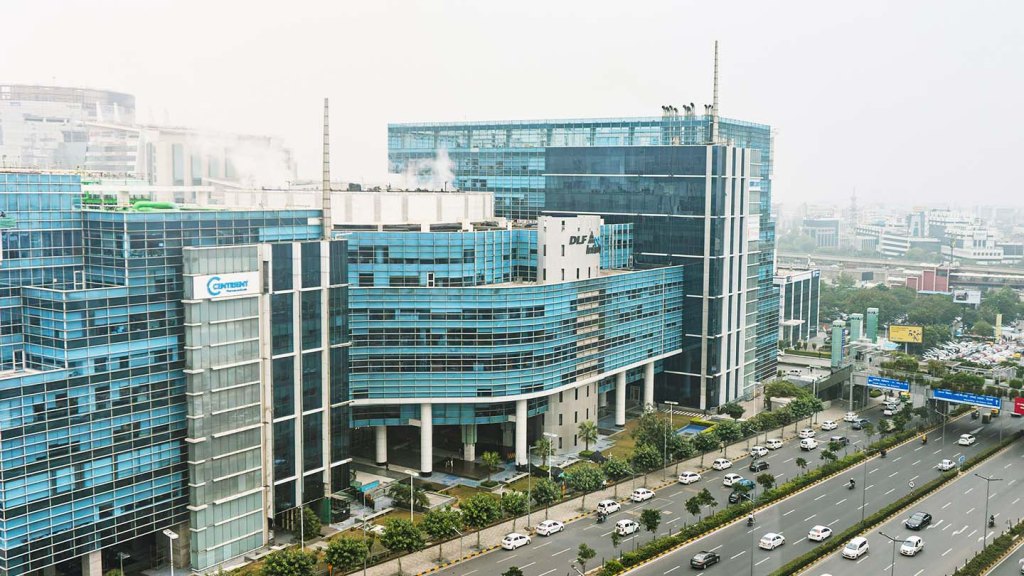
The real estate sector is one of the most recognized sectors.
The market size of The Real Estate Industry in India is estimated at USD 0.33 trillion (27.5 Lakh Crores) in 2024 and is expected to reach USD 1.04 trillion (86.8 Lakh Crores) by 2029, growing at a CAGR of 25.60% during the forecast period (2024-2029).
India’s real estate sector is expected to expand to US$ 5.8 trillion by 2047, contributing 15.5% to the GDP from an existing share of 7.3%.

It comprises sub-sectors like
- Residential
- Office
- Retail
- Hospitality
- Industrial
- In India, the real estate sector is the 2nd highest employment generator after agriculture & 3rd among the 14 major sectors of the economy.
- The growth of this sector is well complemented by the growth in the corporate environment and the demand for office space.
- Demand for residential properties has multiplied in both urban and semi-urban areas due to rising household income.
- It is also expected that this sector will incur more non-resident Indian (NRI) investment, both in the short and long term.
- Retail, hospitality, and commercial real estate are also growing significantly, providing the much-needed infrastructure for India’s growing needs.
- India is among the top 10 price-appreciating housing markets internationally.
Increasing Demand for Affordable Housing
- The high demand for affordable housing dominates the housing market. The current shortage of housing in urban areas is estimated to be 10 million units by the India Brand Equity Foundation. An additional 25 million units of affordable housing are required by 2030 to meet the growth in the country’s urban population.
- The real estate industry has benefited from the push for policy that has resulted in legislation like the Real Estate Regulatory Authority (RERA), the introduction of Real Estate Investment Trusts (REITs), and housing initiatives like PMAY (Pradhan-Mantri Awas Yojana) and SWAMIH (Special Window for Completion of Construction of Affordable and Mid-Income Housing Projects).
- In the financial year 2023-24, the total number of completed houses in urban areas of India under the Pradhan Mantri Awas Yojana (PMAY, The Prime Minister’s Housing Plan) reached 1,58,37,128.
- An increasing number of Indians have been investing in buying residential property, which continues to this day.
Office Real Estate Witnessing Lucrative Growth
- The Indian office real estate market has driven the growth of the commercial real estate sector in the past decades. Once dominated by information technology, office spaces are being increasingly leased by other sectors such as BFSI (banking, financial services, and insurance), engineering, manufacturing, e-commerce, and co-working sectors. The sector has demonstrated consistently low vacancy and high absorption rates.
- Commercial real estate investments have increased as a result of the Real Estate Regulation & Development Act (RERA) and Real Estate Investment Trusts (REITs). REIT owns, manages, and funds income-producing real estate. Office properties have emerged as the most popular sector for investment among high-net-worth individuals (HNI) in India and international PE investors, who together represent the majority of all equity investments in Indian real estate. Investors of all stripes are drawn to this industry by the high rental rates and better profits. Smaller homes and larger families contributed to the country’s increase in flex and co-working spaces.
India Real Estate Market Leaders
- Godrej Properties
- Prestige Estates Projects Ltd.
- Oberoi Realty Limited.
- DLF
- SOBHA limited
*Disclaimer: Major Players sorted in no particular order
 ABARIS Universal Ventures